The technology
STRATMO is our perlite-based vacuum insulation.
It insulates more efficiently than conventional materials, takes up less space and lasts longer.
How it works.
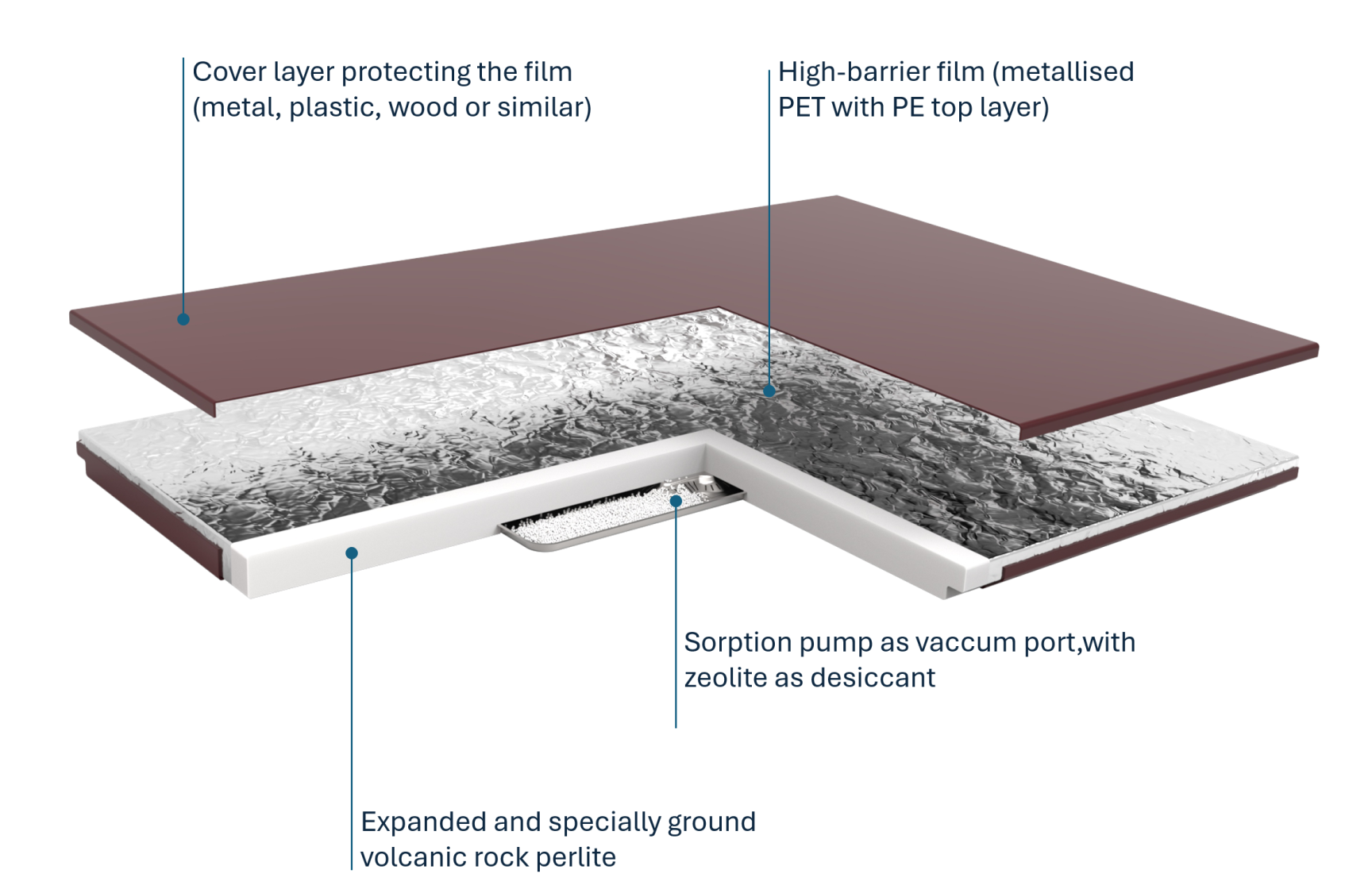
In STRATMO, expanded and ground perlite is sealed under vacuum in a multilayer barrier film. The vacuum eliminates heat conduction through air, and the remaining solid contact between the perlite particles is minimal. The result is λ = 7 mW/m·K. Three times better than PUR, at a fraction of the material cost of conventional vacuum insulation panels.
Illustration based on a panel
Vorteile von STRATMO

Excellent insulating properties (thermal conductivity 7 mW/m·K)
Very high energy efficiency achievable
High stability, self-supporting vacuum body (Young's modulus 20 MPa)
Low material costs
Service life of more than 20 years
Perlite requires little energy to process
Perlite is non-combustible and recyclable as a material
STRATMO components
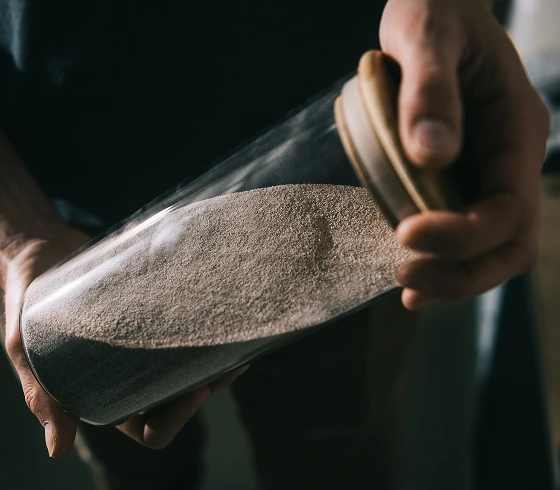
Perlite
At the core of our insulation is perlite, a natural volcanic rock with an extremely fine pore structure. This structure withstands external air pressure and at the same time lowers the vacuum requirement. Inside the pores, one ten-thousandth of normal atmospheric pressure is sufficient. That makes the insulation robust and economical to manufacture.
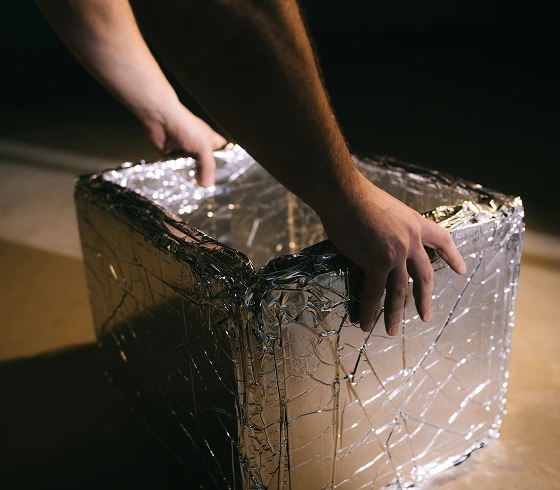
High-barrier film
The high-barrier film keeps the vacuum at the required level over the long term. It consists of a PET carrier layer and ultra-thin metallic barrier layers, with a sealing layer on both sides bonding it firmly to the cover layer. The result is a tight envelope that also adapts flexibly to three-dimensional shapes.
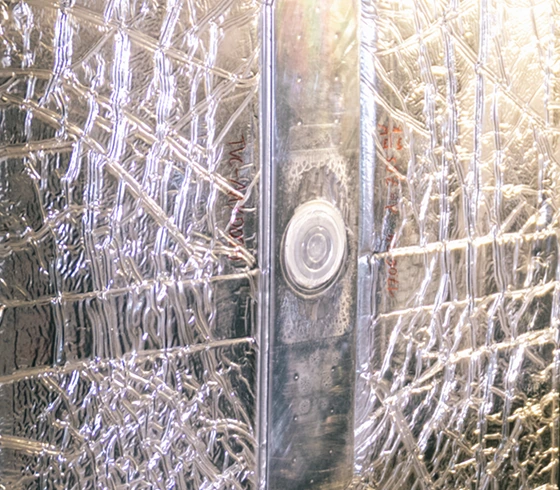
Sorption pump
The sorption pump is the access point to the vacuum system during evacuation and keeps working unseen afterwards. Filled with zeolite, it binds water vapour that would otherwise impair insulation performance over time. It secures the performance of the insulation over the entire product life.
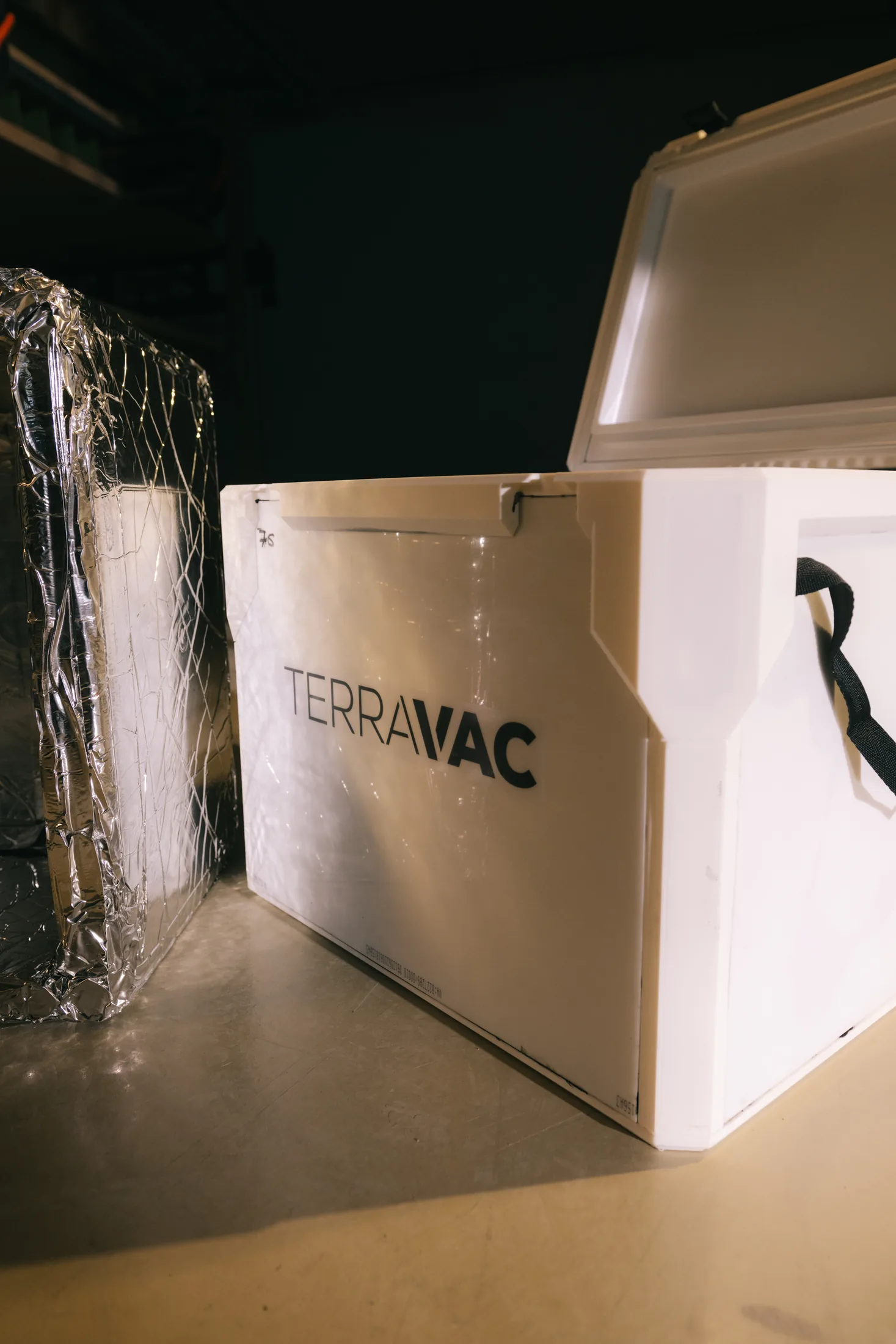
Cover layer
The cover layer protects the film envelope of the vacuum body from mechanical damage. It can be made of different materials and is typically bonded firmly to the core. The sandwich structure gives the component its stiffness, turning the insulation into a load-bearing element that can be integrated directly into the product.
How it works
What is perlite?
Origin
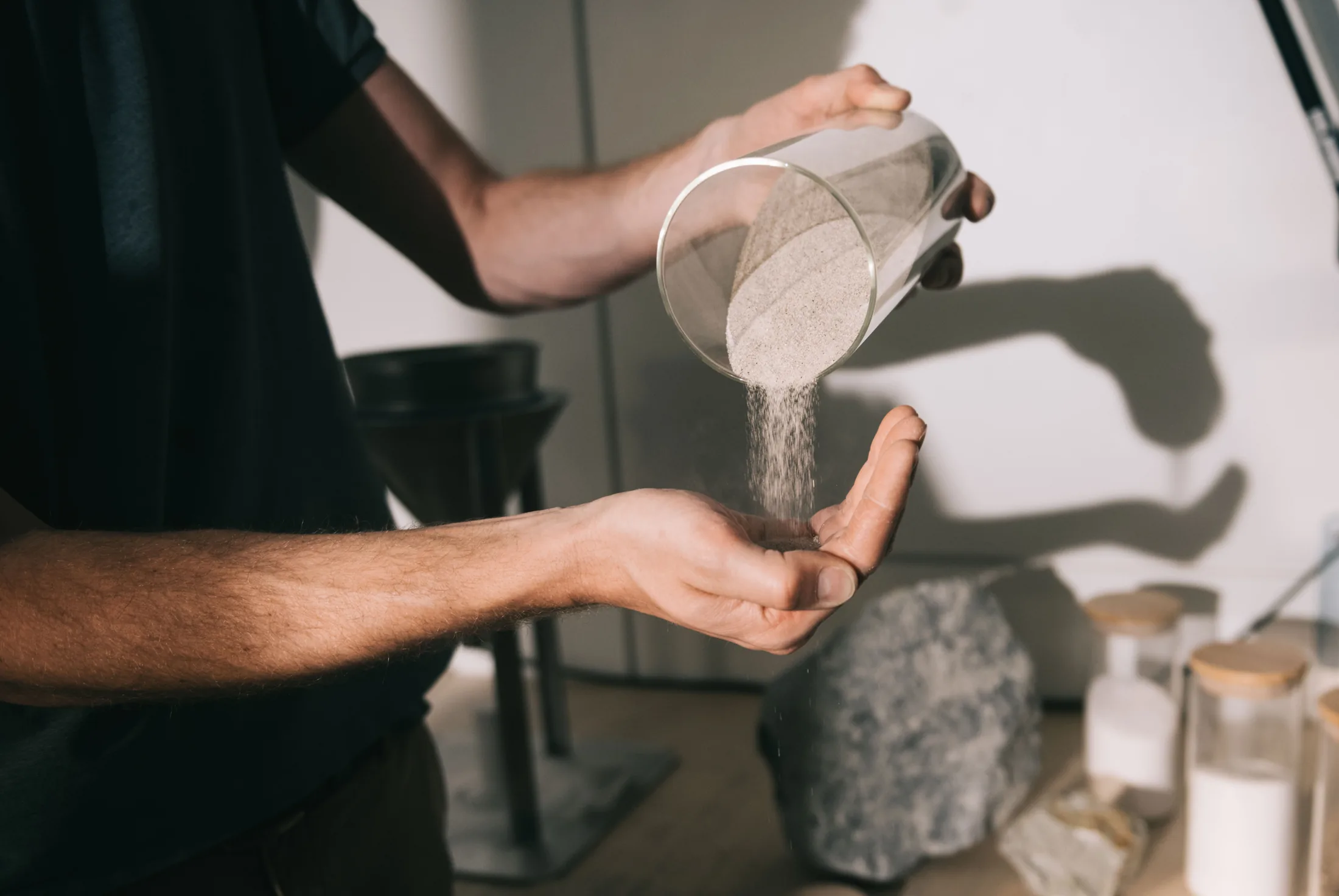
Perlite is ground volcanic rock. When heated above 800 °C, it expands to up to 20 times its original volume. Highly porous, lightweight, with natural insulating properties.
Properties
Expanded perlite is non-combustible, pressure-resistant and chemically inert. No PFAS, no halogens, no harmful substances. And fully recyclable.
Natural volcanic rock
Perlite deposits exist worldwide, and the mineral has been used industrially for decades, from construction to food production. TerraVac builds on this proven basis for a new generation of high-performance insulation.
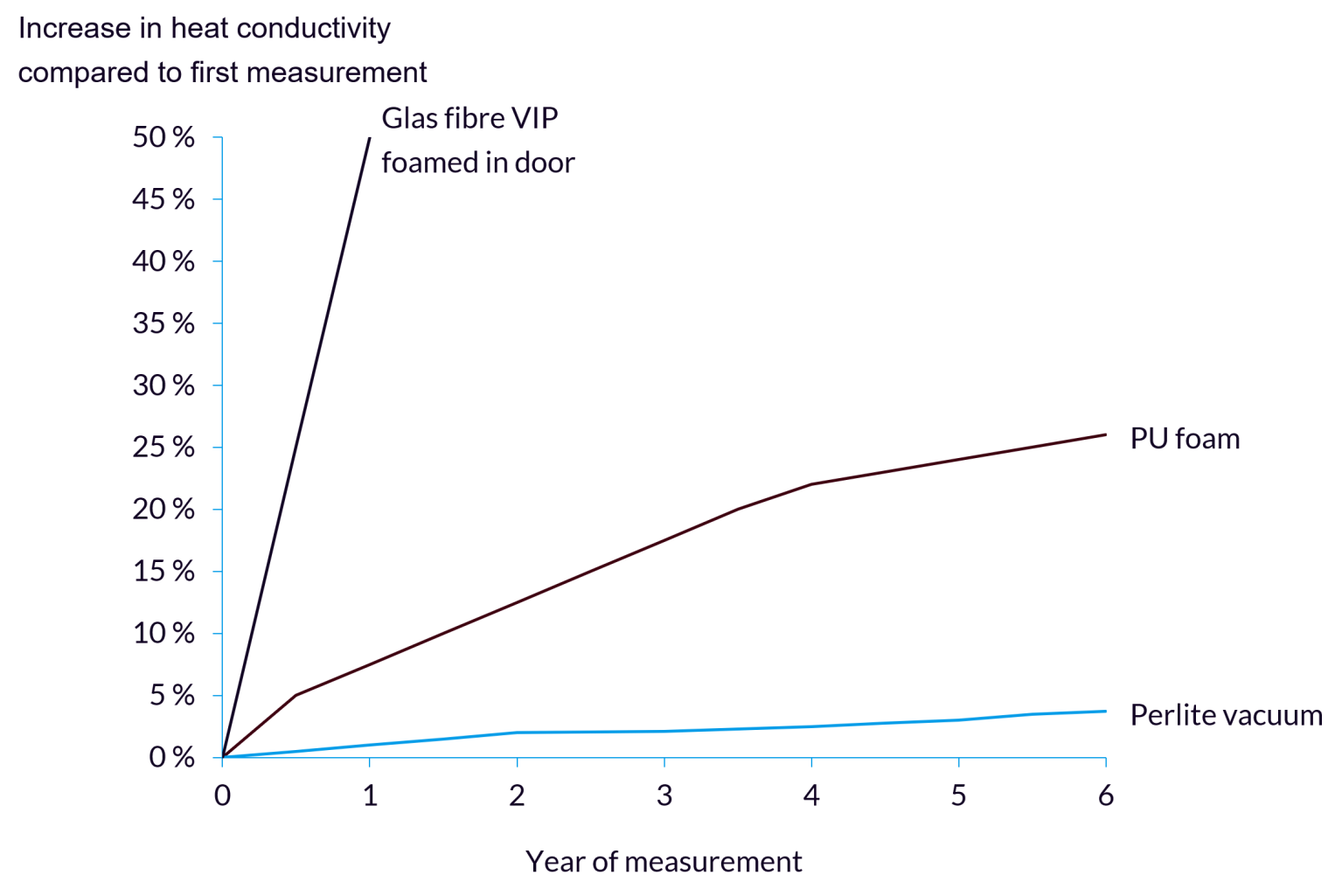
Ageing of different insulation technologies in a freezer
Best performance
STRATMO+
STRATMO+ embeds a glass fibre panel in the vacuum space of a STRATMO body. On its own, glass fibre does not last long. Protected inside the perlite vacuum body, it maintains 1.5 mW/m·K over the long term, several times better than STRATMO. More complex to design, but the best insulation performance per unit of weight in our technology family.

Thermal conductivity 1.5 mW/m·K
In series development
For panels with the highest requirements, such as doors of ultra-low temperature freezers
Best insulation performance per unit of weight
Performance
STRATMO compared.
With λ = 7 mW/m·K (at 10 °C), STRATMO is well below conventional insulation materials. PUR reaches 20–30 mW/m·K, EPS 35–40 mW/m·K. Silica vacuum insulation panels achieve lower initial values but are more expensive and harder to process. STRATMO keeps its performance stable for more than 20 years.
Conventional insulation
Expanded polystyrene (EPS)
Thermal conductivity at 10 °C [mW/m·K]
35 - 40
Thermal transmittance (U-value) [W/m²·K]
0.7
Density [kg/m³]
15 - 30
Stiffness / Young's modulus [MPa]
0.3
Material costs [EUR/m³]
30 - 70
Efficiency cost [EUR·W/m⁴·K]
1.0
Material sustainability
Low
Vacuum insulation
Perlit
Thermal conductivity at 10 °C [mW/m·K]
7
Thermal transmittance (U-value) [W/m²·K]
0.14
Density [kg/m³]
200
Stiffness / Young's modulus [MPa]
20
Material costs [EUR/m³]
40
Efficiency cost [EUR·W/m⁴·K]
0.3
Material sustainability
High
Natural material, low energy input
Natural material, low energy input
Conventional insulation
Mineral wool
Thermal conductivity at 10 °C [mW/m·K]
35 - 40
Thermal transmittance (U-value) [W/m²·K]
0.7
Density [kg/m³]
80
Stiffness / Young's modulus [MPa]
N/A
Material costs [EUR/m³]
30 - 70
Efficiency cost [EUR·W/m⁴·K]
1.0
Material sustainability
Medium
Vacuum insulation
Perlit
Thermal conductivity at 10 °C [mW/m·K]
7
Thermal transmittance (U-value) [W/m²·K]
0.14
Density [kg/m³]
200
Stiffness / Young's modulus [MPa]
20
Material costs [EUR/m³]
40
Efficiency cost [EUR·W/m⁴·K]
0.3
Material sustainability
Hoch
Natürliches Material, geringer Energieaufwand
Natürliches Material, geringer Energieaufwand
Gas-filled insulation
Polyurethane (PUR) foam
Thermal conductivity at 10 °C [mW/m·K]
20 - 30
Thermal transmittance (U-value) [W/m²·K]
0.4
Density [kg/m³]
30 - 40
Stiffness / Young's modulus [MPa]
5
Material costs [EUR/m³]
60 - 150
Efficiency cost [EUR·W/m⁴·K]
1.7
Material sustainability
Low
Problematic blowing agents, low recyclability
Problematic blowing agents, low recyclability
Vacuum insulation
Perlit
Thermal conductivity at 10 °C [mW/m·K]
7
Thermal transmittance (U-value) [W/m²·K]
0.14
Density [kg/m³]
200
Stiffness / Young's modulus [MPa]
20
Material costs [EUR/m³]
40
Efficiency cost [EUR·W/m⁴·K]
0.3
Efficiency cost [EUR·W/m⁴·K]
High
Natural material, low energy input
Natural material, low energy input
Vacuum insulation
Fumed silica
Thermal conductivity at 10 °C [mW/m·K]
3.5
Thermal transmittance (U-value) [W/m²·K]
0.17
Density [kg/m³]
120
Stiffness / Young's modulus [MPa]
1.5
Material costs [EUR/m³]
600
Efficiency cost [EUR·W/m⁴·K]
2.0
Material sustainability
Low
Very high energy demand in production
Very high energy demand in production
Vacuum insulation
Perlite
Thermal conductivity at 10 °C [mW/m·K]
7
Thermal transmittance (U-value) [W/m²·K]
0.14
Density [kg/m³]
200
Stiffness / Young's modulus [MPa]
20
Material costs [EUR/m³]
40
Efficiency cost [EUR·W/m⁴·K]
0.3
Material sustainability
High
Natural material, low energy input
Natural material, low energy input

Sustainability
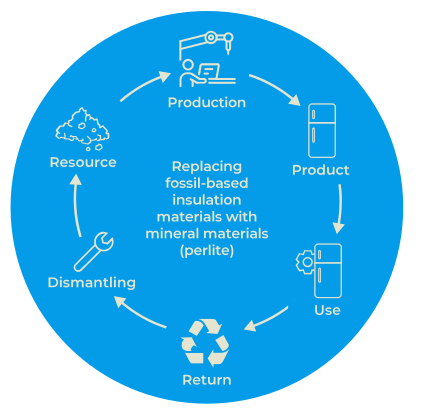
Good insulation. Built for circularity.
Unlike conventional solutions, our technology does not rely on petroleum-based PUR foam but on the mineral insulating material perlite.
Perlite is a natural raw material that can be recovered and reused after use, an essential prerequisite for a genuine circular economy.
The technology also opens up new possibilities for design for recycling, as materials can be separated and reused more easily.
Applications
Wherever maximum efficiency matters.
01
Pipes
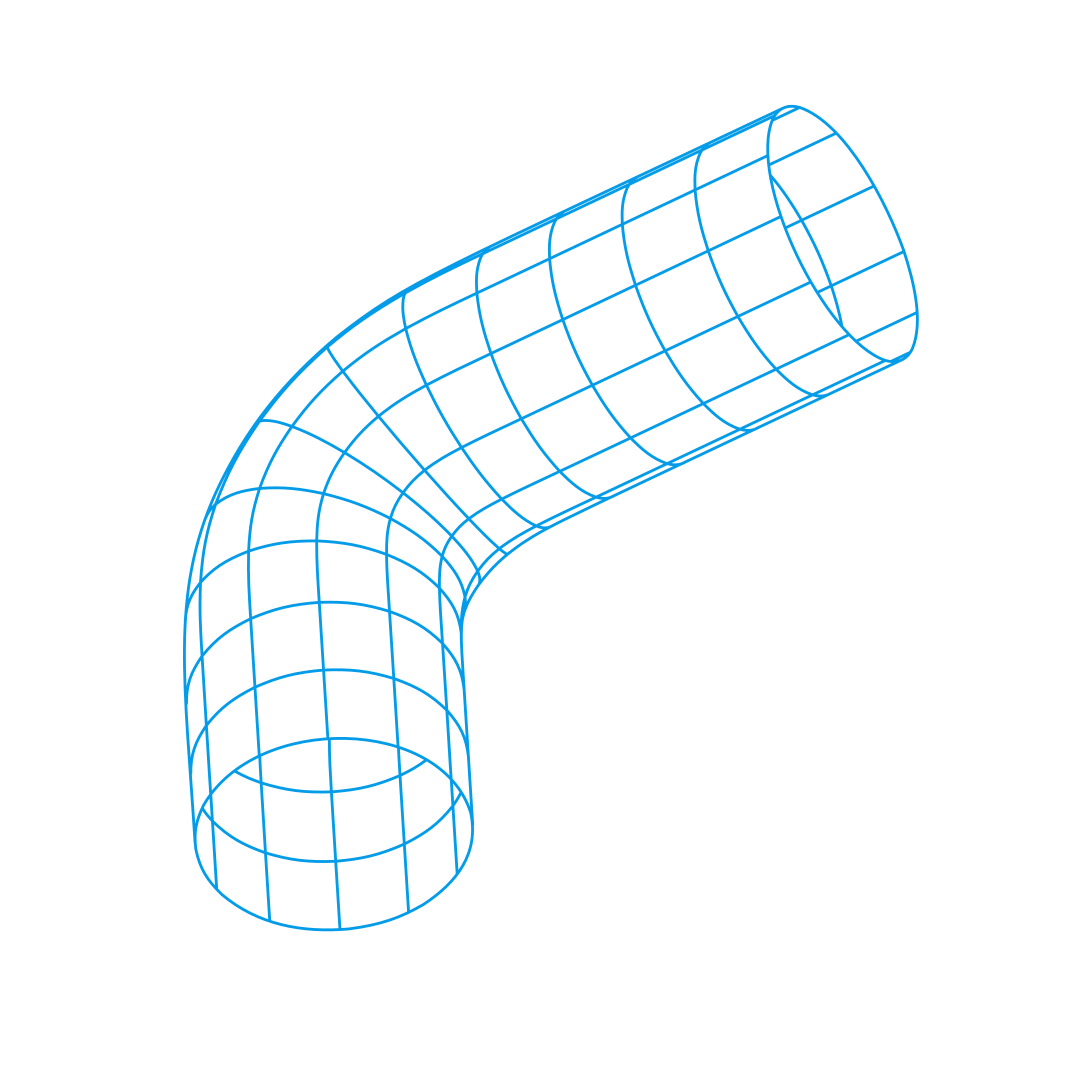
District heating and cryogenic pipes lose far less heat with our insulation and have a smaller outer diameter, which makes transport and civil engineering noticeably simpler.
02
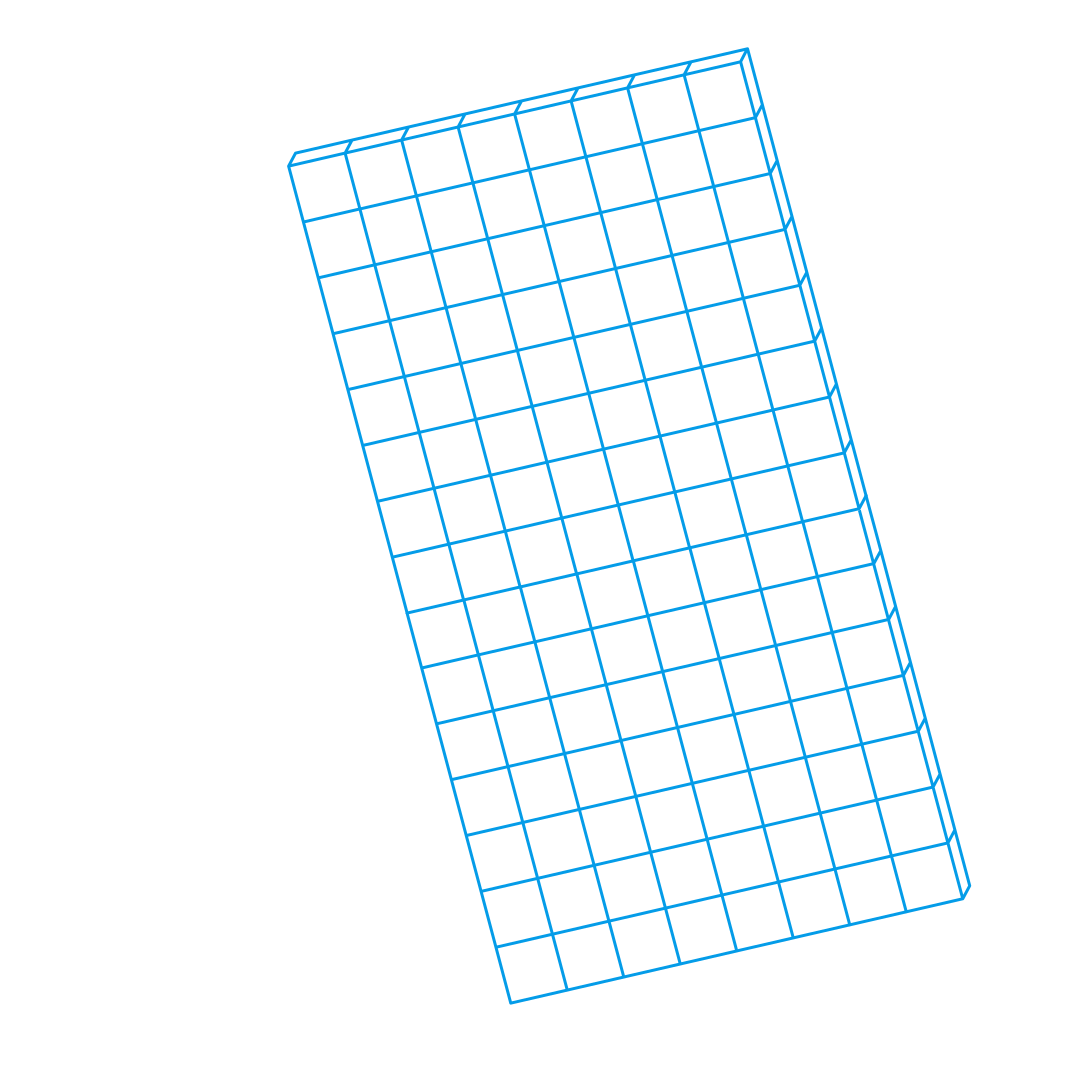
Panels
For cold storage, doors and building applications, our panels deliver top insulation performance at low thickness and can be integrated directly into system providers' own products.
03
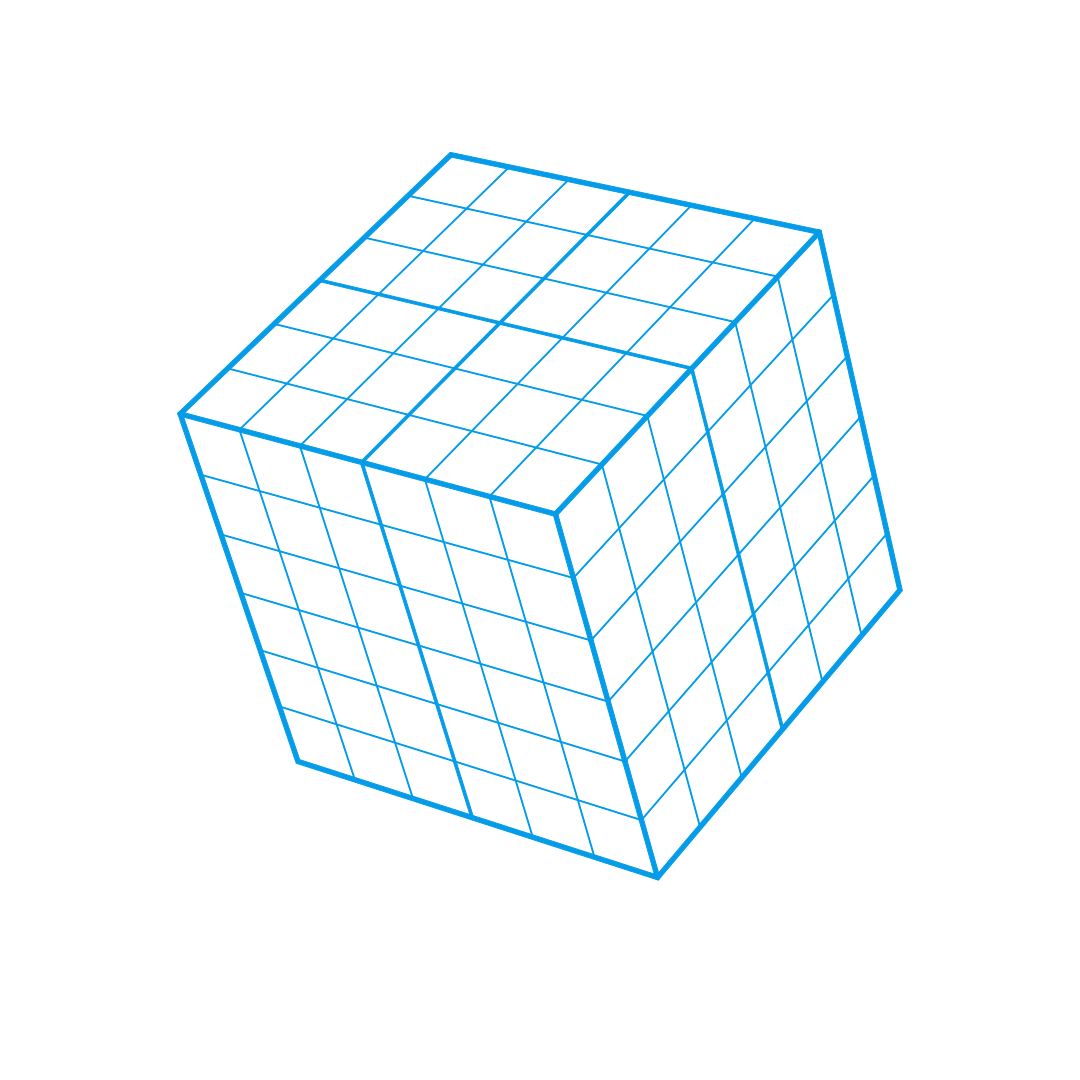
Boxes
Whether for pharma, outdoor use or large-scale transport, our vacuum insulation keeps temperatures passively stable for long periods and creates significantly more usable volume within the same outer dimensions.
01
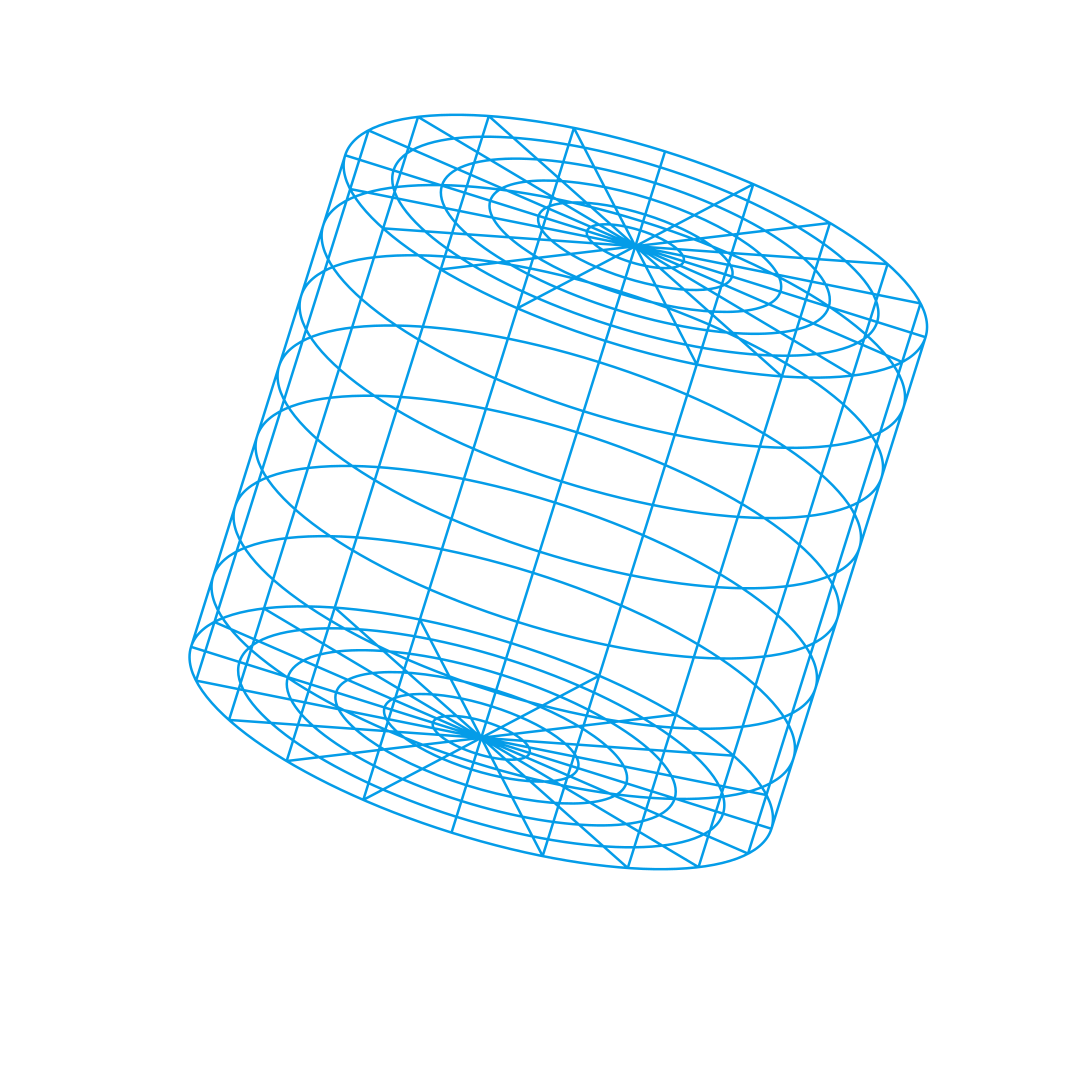
Tanks
Hot water, cold and hydrogen storage tanks reach higher energy efficiency classes with our insulation without becoming bulky from thick insulation layers.
Reference projects
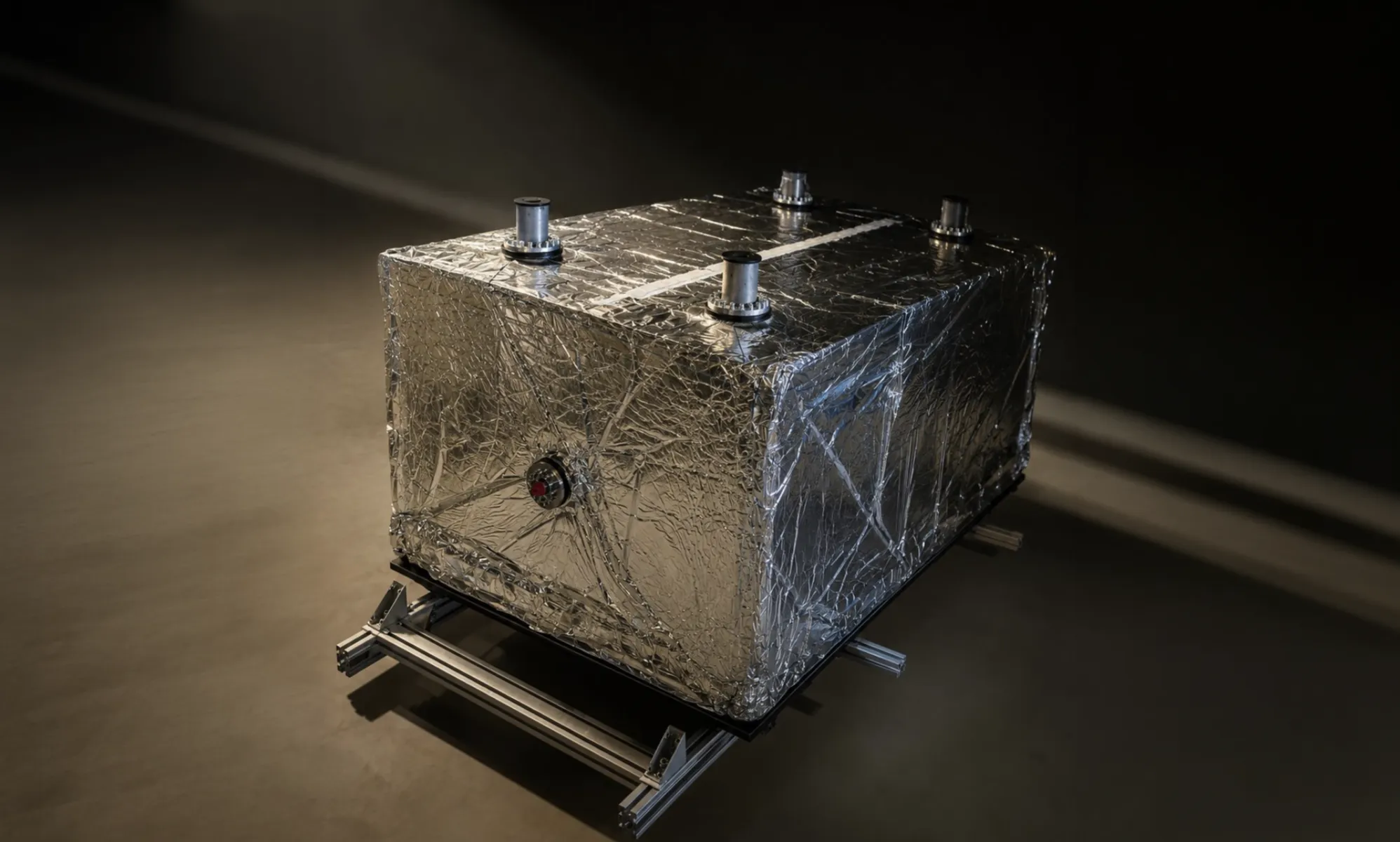
STRATMO projects

View details
Panels for cold rooms
View details
Kältetank für Gefriertrocknungsanlage

FAQ
Questions we hear often.
New technology raises questions. Here are the ones we hear most often.
What applications is STRATMO suitable for?


How does STRATMO create more usable volume in refrigeration appliances?
How do hot water storage tanks reach energy efficiency class A with STRATMO?
Is STRATMO suitable for district heating and piping systems?
Can STRATMO technology also be used to make insulation panels for the construction industry?
What is STRATMO+ and how does it differ from STRATMO?
News & insights
News from TerraVac.
Company news, insights into our technology and reports from the field.