This article explains who is behind TerraVac, why the company exists, and how collaboration works from the initial idea to series production.
In short
TerraVac is a deep-tech company specializing in industrial vacuum insulation. Based in Karlstadt, we are a wholly owned subsidiary of the Liebherr Group. We develop foil-based perlite vacuum insulation and other insulation technologies, covering everything from thermodynamic design to mass production. The technology has been in series production since 2019 and is currently used in refrigerators, freezers, storage tanks, pipes, and panels.
Key takeaways
- TerraVac was founded in December 2023 as an independent corporate start-up within the Liebherr Group. The underlying perlite vacuum technology has been in series production within the Liebherr Group since 2019.
- We view insulation as a system challenge rather than just a component. That is exactly where the greatest value for our customers lies.
- Four product lines cover a range of applications: STRATMO, STRATMO+, GLAXYN, and SILYNT.
- We have intentionally made it easy to start working with us, beginning with a technical workshop.
Anyone looking for vacuum insulation for industrial applications will sooner or later come across TerraVac. We are a young company backed by a technology that the industry has been working on for decades. This article answers who we are, where we come from, and what sets us apart from other providers.
Why does TerraVac exist?
TerraVac exists to finally deliver on an old promise in insulation technology. While vacuum insulation is physically the most efficient form of insulation, it was long considered too expensive and not suitable for mass production. We are changing that. Our philosophy can be summed up in one sentence: We make vacuum insulation affordable.
Demand is growing from two directions. Energy efficiency requirements and product labeling are becoming stricter, whether for refrigerators, hot water tanks, or heating networks. At the same time, PU foam—the current industry standard—is facing increasing regulatory pressure. Manufacturers need insulation that performs better while fitting seamlessly into industrial processes.
This is exactly where we come in. We are not just a material supplier; we are a partner that develops products alongside our customers, taking them all the way to series production.
Where does TerraVac come from?
TerraVac emerged from the Liebherr Group to industrialize a technology that the industry had struggled with for decades: a three-dimensional vacuum insulation made of perlite fill in high-barrier foil that doesn't just get inserted as a panel, but actually takes the shape of the product itself.
The technology has been in series production at the Liebherr Group since 2019, initially for freezer door applications. Full-scale mass production followed in 2022, publicly unveiled under the name BluRoX. The next step came in December 2023: TerraVac was founded as an independent company with the mission to bring this technology beyond refrigeration and into all relevant industries.
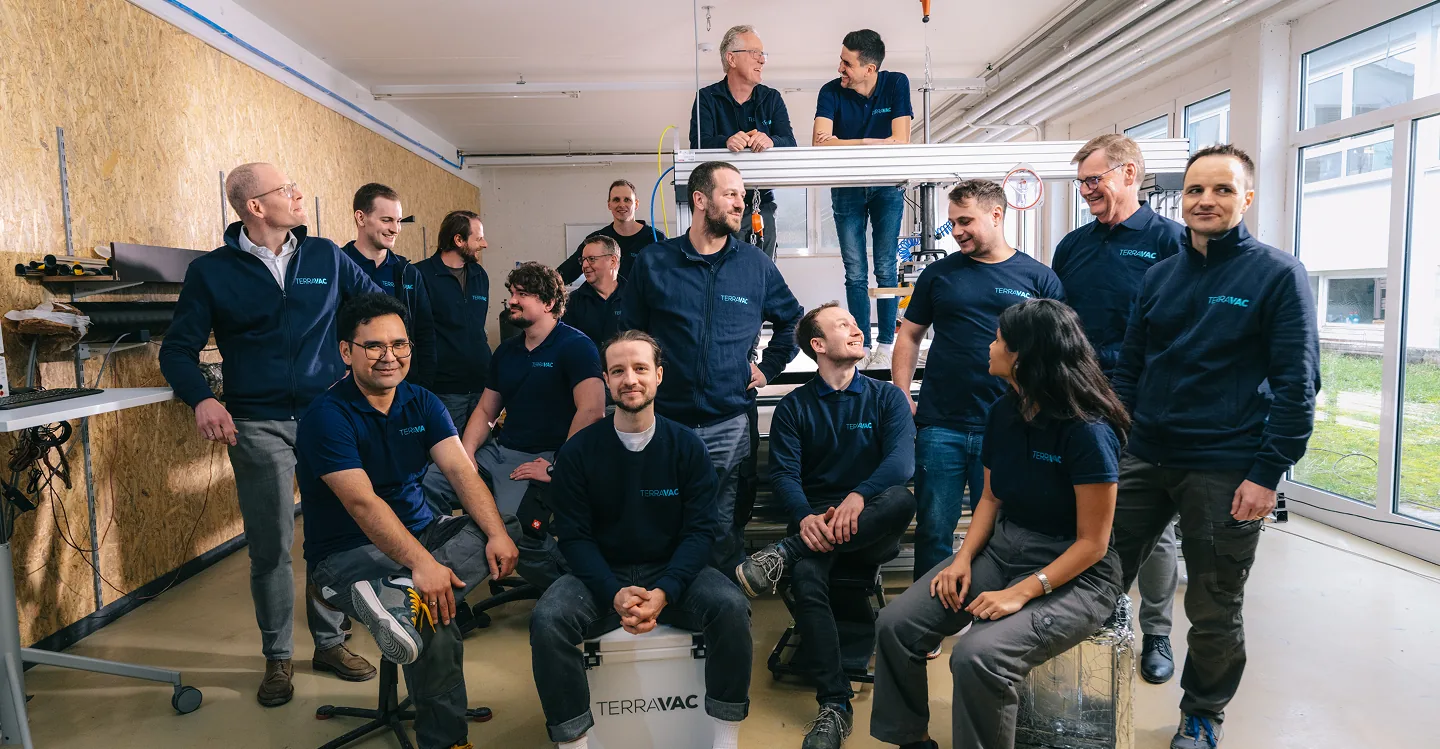
Today, around 20 employees in Karlstadt are dedicated to this mission, including physicists, design engineers, manufacturing and data engineers, and technical project managers. We operate our own laboratories with thermal measurement technology, as well as our own workshops and production facilities, where we handle everything from prototypes to series supply. The inventors of the technology are part of the team, backed by a Liebherr Group patent portfolio comprising more than 50 intellectual property rights.

What sets TerraVac apart from other providers?
The most important difference lies not in the material, but in the mindset. Most manufacturers view insulation as a component to be swapped out. That is convenient, but it sacrifices the majority of the potential benefits. Instead, we look at the entire product and identify optimizations that go far beyond just insulation.
One example illustrates what this means. For a freezer, we didn't just replace the existing foam one-to-one; we rethought the entire appliance. The reduced heat ingress allowed for a different arrangement of the cooling technology, designed as an easily replaceable drawer. This simultaneously improved usable volume, serviceability, and energy efficiency. The result is a different product, not just one that is better insulated. We describe in detail why the physical difference is so significant and what can be achieved with it in our article on the advantages of vacuum insulation.
The fact that this approach is also ecologically sound is measurable. A Liebherr Group freezer with full perlite vacuum insulation is Cradle to Cradle Certified® Bronze and has been awarded the German Sustainability Award. For us, sustainability is not just a statement—it is a calculation that has to add up.
Our market thesis is also part of the bigger picture. Vacuum insulation has the potential to replace foam as the industry standard. However, the path to achieving this must necessarily begin in the premium segment, not the mass market. Those who understand this see small initial volumes not as a contradiction to the technology's potential, but as the necessary starting point.
What products does TerraVac offer?
Our portfolio includes four product lines designed for different requirements.
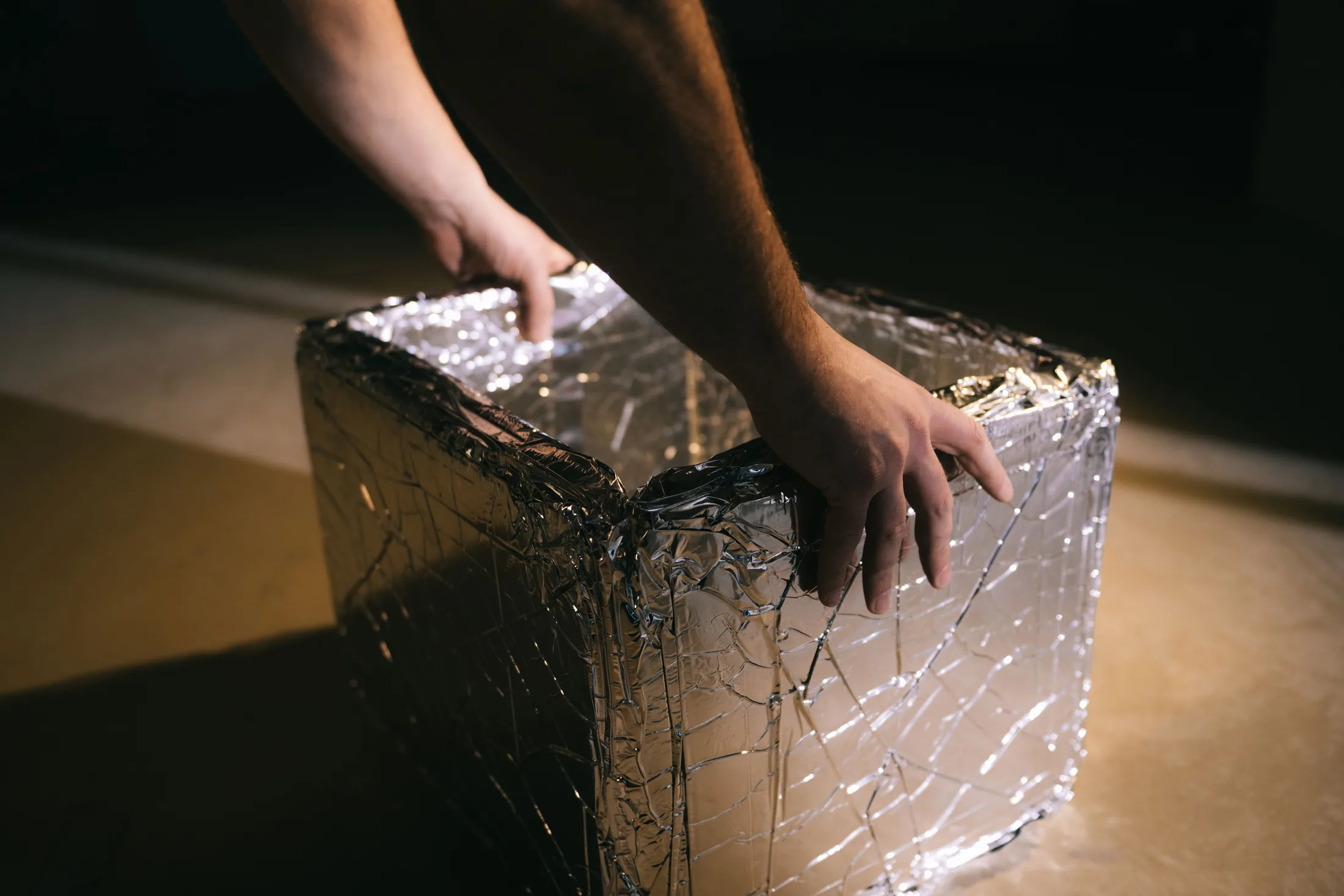
STRATMO is our foil-based perlite vacuum insulation. The vacuum body is self-supporting and is built into the shape of the product, whether it is a container, pipe, panel, or drawer. In this way, it combines structure and insulation into a single component.
STRATMO+ extends the principle for applications with particularly limited installation space or increased requirements. While STRATMO is effective from an insulation thickness of about 30 mm, STRATMO+ allows for configurations starting at 10 mm.
SILYNT adds thermoelectric cooling to the insulation and is suitable for cooling drawers and compact refrigeration applications where conventional cooling technology reaches its limits.
GLAXYN rounds off the portfolio in the field of vacuum-insulated windows.
We clarify which line suits which application early on in our discussions. The answer is often a combination of technology and modified product architecture.
What is it like to work with TerraVac?
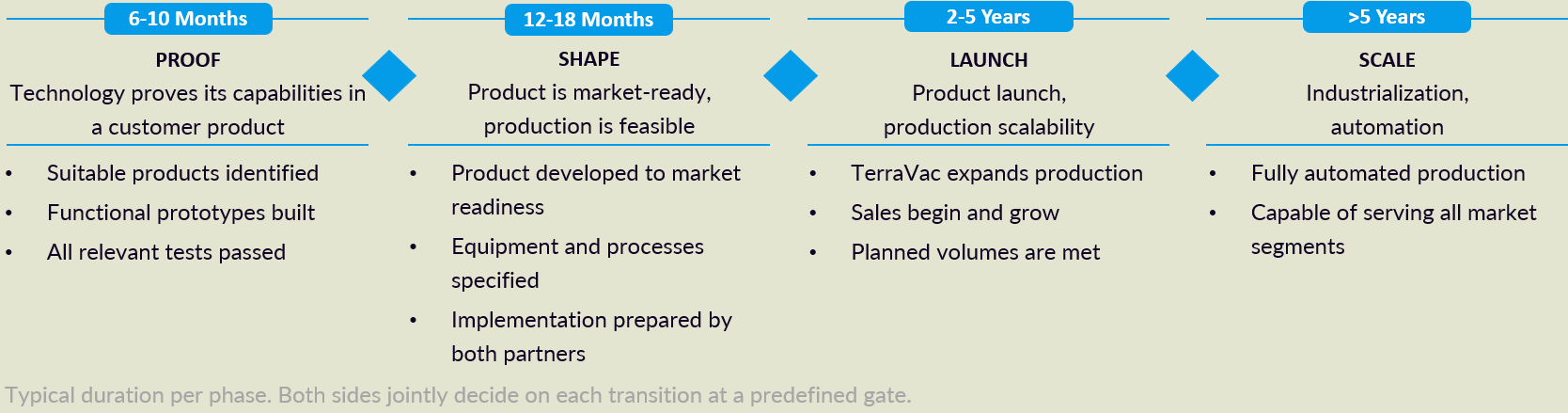
We keep the entry point intentionally simple. We start with a technical workshop where we jointly clarify requirements, target values, and feasibility, and select a pilot product. In the subsequent Proof phase, we build functional prototypes using your product, which you then test under your own conditions. We estimate six to ten months from the workshop to having reliable prototypes.
In the Shape phase, this evolves into a marketable product, including specified systems and processes. This typically takes twelve to eighteen months. Both sides decide on each next step together at a pre-defined gate. This keeps resource allocation manageable in every phase.
One point is particularly important to us because it addresses our customers' most common concern. Vacuum insulation does not fit one-to-one into an existing production line, and we are upfront about that. That is exactly why the Launch phase exists. We initially set up production at our facility and supply you until your volumes justify your own line. You can go into series production before investing in your own equipment. The production question is therefore deferred, not a blocker.
What does the connection to Liebherr mean?
TerraVac is a wholly owned subsidiary of the Liebherr Group, operating as an independent corporate start-up. For our customers, this combines the best of both worlds: the speed and pragmatism of a small team with the industrial substance of a family-run technology company with over 55,000 employees and 14.7 billion euros in revenue in 2025.
With TerraVac, Liebherr has consciously ventured into something new. Not out of necessity, but out of the conviction that there is room for radical technological rethinking alongside established strength. This mindset also shapes our communication. We address open questions just as we do our successes, because honest progress reports are more credible than polished success stories.
How to get started with TerraVac
If you would like to see if our technology is a good fit for your product, we recommend this approach.
- Evaluate your use case. Ask yourself three questions: Does the installation space determine the product's value? Does the energy efficiency class decide your market success? Would more usable volume within the same external dimensions be a selling point? A single "yes" is enough to get started.
- Schedule an initial consultation. In a technical discovery call, we will work together to determine if and where our technology can make an impact on your product.
- Conduct a workshop. In the workshop, we define requirements, target values, and a pilot product. We would be happy to host you at our facility in Karlstadt, where you can see our production and measurement technology firsthand.
- Test prototypes. You test functional prototypes under your own conditions and use those results to decide on the next steps.
Frequently asked questions about TerraVac
What sets TerraVac apart from a traditional material supplier?
We don't just supply the vacuum body; we support the entire product development process. This often leads to changes in the product architecture itself, as seen in the example of the cooling drawer. This systems-oriented approach is the core of our offering, not just an added benefit.
What does being part of Liebherr mean for working with TerraVac?
As a corporate start-up, TerraVac makes its own operational decisions. Being part of Liebherr gives our customers the added security of an industrial owner in the background, without corporate structures slowing down the speed of our collaboration.
Which industries does TerraVac work with?
We work with industrial clients in refrigeration and cooling technology, hot water and heat pump storage technology, district heating, as well as manufacturers of building panels and vacuum-insulated windows. What all these applications have in common is that insulation performance, installation space, or energy efficiency class are key drivers of product value.
Do I need to invest in my own facilities immediately to collaborate?
No. We initially set up the production ourselves and supply you until your volumes justify your own line. This allows you to go into series production before deciding on investments in your own manufacturing equipment.
Conclusion
TerraVac was founded to move vacuum insulation from a niche application into mass production. The technology is proven, the team combines inventors and industrialization experts, and with Liebherr, we have an owner with a long-term vision. What sets us apart is our holistic approach. When you view insulation as a system-level challenge, you end up developing a better product, not just one that is better insulated. Or, in a nutshell: Vacuum insulation. Reimagined. Brought to series production.
If you would like to find out what this means for your product, get in touch with us. Schedule an initial technical consultation or visit us in Karlstadt. You can reach us at info@terravac.eu.
Detailed answers to further questions can be found in our FAQ.